

Camera Ready Winter Photoshoot Outfits: 3–4 Colors, Made to Order Fit
Pick a cohesive color palette and one visible statement layer, then build hidden insulating layers underneath so you look warm and relaxed instead of stiff and shivering. Anchor the group around the main subject’s outfit first and let everyone else coordinate from there. That combination, done right, is what separates cozy, camera-ready photos from ones where everyone looks cold and mismatched.
TL;DR:
- Choosing jewel tones or earthy neutrals enhances contrast against winter snow and prevents colors from blending into the background.
- Layering should separate visible statement pieces from hidden warmth layers to maintain a sleek silhouette while staying warm outdoors.
- Fitted outfits with textured fabrics that allow movement work best for solo portraits, while coordinating tones and limiting patterns benefit group photos.
- Custom-fit clothing, especially for plus sizes or maternity, reduces discomfort and improves how outfits sit in photos under layers.
- Starting with one person’s outfit and building the group’s palette around it streamlines planning and results in more cohesive images.
Table of Contents
- Winter Photoshoot Outfits: Color Palettes That Photograph Well
- Outfit Formulas for Solo Portraits, Couples, and Families
- Layering for Warmth Without Losing Your Silhouette
- Boots, Accessories, and Props That Add Warmth and Style
- Your Winter Photoshoot Coordination Checklist
- Why Fit and Styling Expertise Matter for Winter Sessions
- Choosing Outfits by Winter Photoshoot Theme
- Flattering Silhouettes and Fits That Work Under Layers
- Makeup and Hair Tips for Cold Weather Sessions
- A Stylist’s Rule Worth Remembering
- Shop Winter Photoshoot Outfits at Prima Dons and Donnas
- Sources
- FAQ
Winter Photoshoot Outfits: Color Palettes That Photograph Well
Snow and gray skies change how color reads on camera, so the palette matters more in winter than any other season. Rich jewel tones and earthy neutrals create real contrast against white snow and flat winter light, while pale colors tend to vanish into the background.
Here are palettes that consistently work for winter photoshoot dress ideas and family sessions alike:
- Jewel tones: burgundy, emerald, plum, and sapphire pop against both snow and bare trees.
- Earthy neutrals: chocolate brown, olive, camel, and charcoal gray photograph as warm and grounded.
- Soft neutrals with navy: cream and oatmeal paired with one deep navy piece for anchor and depth.
- Muted pastels: dusty blue or soft rose work well for indoor or golden-hour sessions, though they wash out in flat overcast light.
Avoid very light neutrals like ivory or pale gray if you’re shooting directly on fresh snow. They blend into the backdrop and flatten the whole image. Bright neons and true white are the two colors to skip entirely. Neon distracts from faces, and it can throw an odd color cast onto skin. If you want a bright accent, use it in a small dose. A red scarf or a burgundy hat against a neutral coat reads as intentional. A neon jacket does not.
Outfit Formulas for Solo Portraits, Couples, and Families
Different group sizes need different outfit logic, but the same rule underlies all of them: fewer competing elements, more texture.
1. Individual portraits
For solo shoots, movement matters more than most people realize. A long dress, midi skirt, or flowy coat catches wind and creates motion that a stiff, structured outfit cannot. Choose fitted pieces through the shoulders and waist, then let the bottom half move. Textured fabrics like velvet, cable knit, corduroy, and suede add visual richness without adding bulk, which matters when the camera is close.
2. Couples
The easiest formula for couples is one statement piece plus complementary neutrals. If one partner wears a bold burgundy coat, the other should wear a neutral that pulls from the same color family, like camel or chocolate, rather than matching burgundy exactly. Matching head to toe reads as costume-like on camera; coordinating tones reads as styled.
3. Families
Start with the main subject’s outfit, usually a parent or the person the session is centered on, and build everyone else’s look around it. Limit the whole group to 3 to 4 tones total and avoid mixing more than one bold pattern. A plaid scarf on one child and a solid sweater on everyone else works. Plaid on three people at once competes for attention.
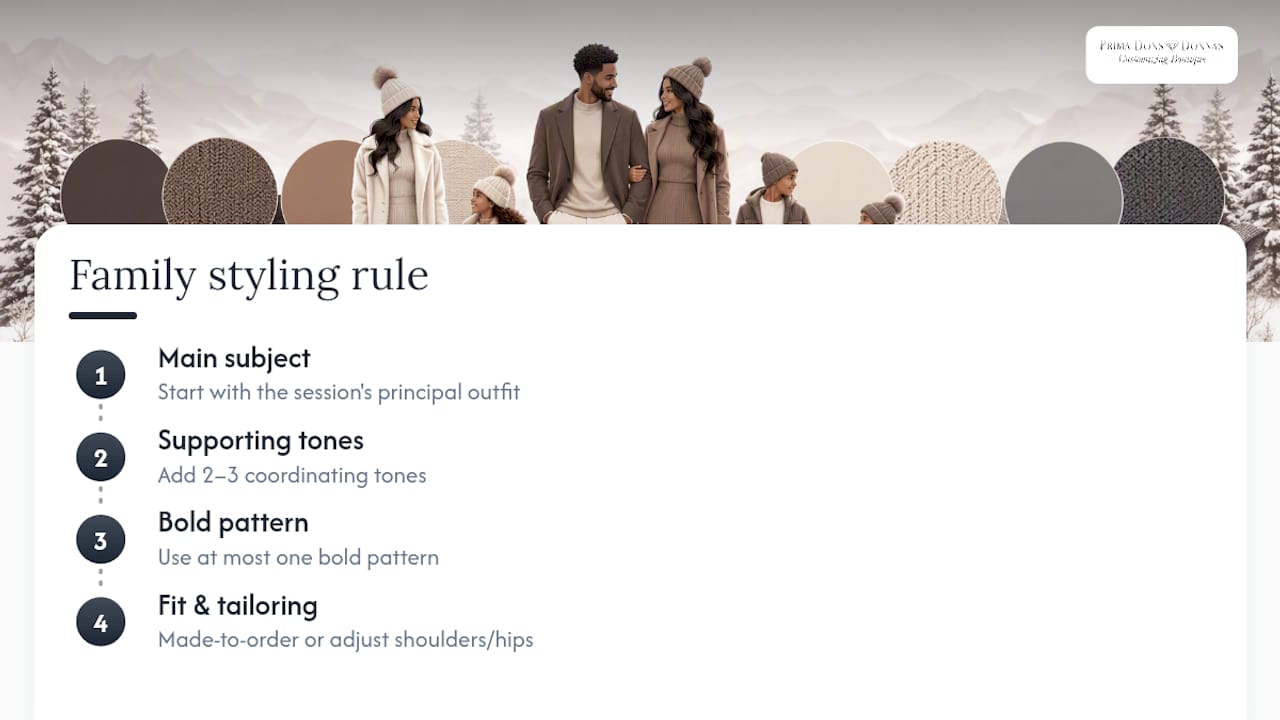
Maternity and plus-size styling benefit from the same fitted-through-the-middle, flowing-at-the-bottom approach used for solo portraits. A wrap dress or an A-line silhouette in a stretch fabric moves well, flatters a changing shape, and photographs confidently regardless of size. Made-to-order pieces solve a real problem here: off-the-rack winter coats and dresses are cut for one body type, and a size adjustment at the shoulders or hips can change how an entire outfit sits in photos.
Layering for Warmth Without Losing Your Silhouette
The biggest mistake in winter photoshoot outfits is choosing warmth or style, when the goal is both at once. The fix is splitting your layers into two categories: what the camera sees, and what only you feel.
Visible layers are your statement pieces: a tailored wool coat, a faux-fur wrap, a chunky scarf. These add shape and warmth at the same time, so they do double duty.
Hidden layers go underneath and never show: thermal base layers, a slim fleece, and insulated socks. This is where most of your actual warmth comes from, and because no one sees them, you can layer as heavily as you want without changing how the outfit looks.
Favor wool, fleece, and cable knits. Avoid heavily quilted puffer jackets as your visible layer. They photograph as shapeless and can hide the waistline entirely.
- Pack chemical hand warmers for pockets and boots.
- Schedule short indoor or car warm-up breaks every 15 to 20 minutes.
- Bring a backup coat or wrap in case the wind picks up.
Pro Tip: Photographers consistently note that visible discomfort shows up in photos before you even feel cold enough to complain. If your subject’s shoulders are creeping up toward their ears, take the warm-up break before you need it, not after.
Boots, Accessories, and Props That Add Warmth and Style
Footwear gets overlooked constantly, and it shouldn’t. Snow and uneven ground call for waterproof, insulated boots with real traction, not the cute ankle booties that look great for five minutes and then become a liability. Pack a secondary “pretty” pair of shoes for static, posed shots where you’re not walking, then swap back into boots between setups.
Accessories do more work than people expect:
- A faux-fur wrap or stole adds texture and warmth around the shoulders and face.
- Mittens photograph better than gloves in close-up shots and keep hands warmer.
- Blankets and warm drinks double as functional warmth items and styling props, giving hands something natural to hold.
Keep bold accessory colors near the face intentional, since a bright hat draws the eye first.
Your Winter Photoshoot Coordination Checklist
Pull everything together with a short prep list before session day.
- Choose the main subject’s outfit first, then build 3 to 4 complementary colors around it for everyone else.
- Limit patterns to one bold print per group, worn by one person, not several.
- Do a dress rehearsal, photographing everyone in full outfits and shoes together to catch color clashes or fit problems before the actual shoot.
- Pack backups: spare shoes, an extra layer, hand warmers, a lint roller, and quick touch-up items like a small mirror or bobby pins.
- Confirm timing with your photographer for the best light, and build in short warm-up breaks so no one is gritting their teeth through the last ten minutes.
Why Fit and Styling Expertise Matter for Winter Sessions
Getting winter photoshoot outfits right is as much about fit as it is about color. A coat that gaps at the back or a dress that pulls at the shoulders reads on camera even when the color palette is perfect. That’s the gap made-to-order clothing closes: custom-fit garments reduce apparel-related discomfort and let the outfit sit the way it was designed to, in any size.
A tailored coat or faux-fur wrap in the right color avoids the bulky compromises off-the-rack winter outerwear often forces, and it photographs with a cleaner line every time.
Some fashion brands build pieces like custom coats and plus-size dresses in colors matched to a client’s exact palette, reducing fit worries in photos.
Choosing Outfits by Winter Photoshoot Theme
The theme of your session should shape the formality of your outfit choices, not just the color palette.
Holiday sessions call for richer, more festive tones: deep reds, emerald green, plaid accents used sparingly, and metallics in small doses like a belt or shoe. These work especially well for family cards and mantle photos, where a slightly dressier feel is expected.
Casual outdoor sessions, like a walk through a snowy park or a lifestyle shoot at home, lean into cozy knits, denim, and relaxed layering. A chunky sweater with jeans and boots photographs naturally without looking overdressed for the setting.
Formal winter sessions, including engagement photos or portraits meant for larger prints, benefit from structured coats, gowns, or tailored separates in jewel tones or deep neutrals. This is where a statement piece, like a floor-length faux-fur wrap or a fitted velvet dress, earns its place.
Match your accessories to the theme too. A holiday shoot can handle a plaid scarf or a subtle metallic clutch. A formal session looks better with a single elegant accessory, like a structured clutch or fitted gloves, rather than several competing pieces. Deciding on theme before palette keeps the whole outfit-planning process faster, because it narrows your color and fabric choices immediately instead of leaving every option open.
Whatever the theme, the layering principles stay the same: warmth hidden underneath, style visible on top.
Flattering Silhouettes and Fits That Work Under Layers
Layering adds bulk by nature, so the fit of your base pieces matters more in winter than in any other season. A dress or top that’s fitted through the bust and waist gives your silhouette a defined shape, even with a coat or wrap over it. Loose, boxy pieces stacked under a bulky coat tend to erase your shape entirely on camera.
A-line and wrap silhouettes are reliable choices because they cinch at the natural waist and flow outward, which flatters most body types and leaves room for a slip layer or thermal underneath. Avoid anything so fitted through the hips that it restricts movement or bunches when you add tights or leggings underneath.
For plus-size styling specifically, structured waistbands and defined necklines do more visual work than an all-over loose fit. A wrap dress or a fitted coat with a belt creates a shape the eye can follow, which matters even more once a scarf or wrap is layered on top. Custom sizing solves the fit problem directly here, since a garment built to your actual measurements holds its shape under layers instead of shifting or gapping.
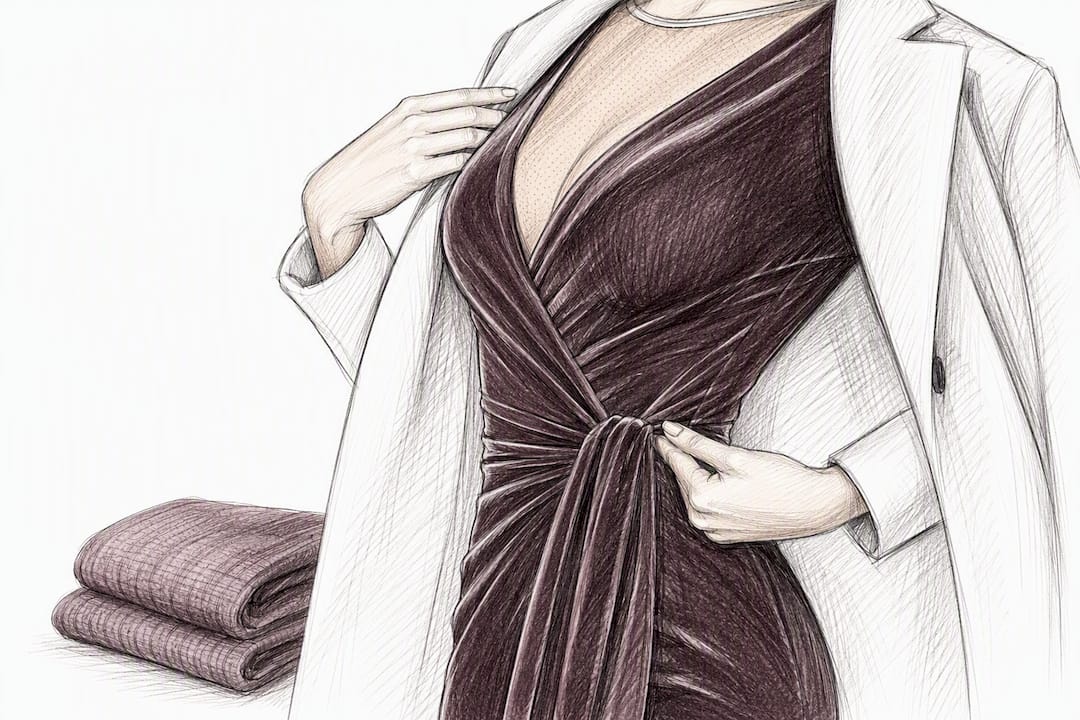
One more practical note: test your full outfit, layers included, before the shoot. A dress that fits perfectly alone can pull differently once you add a coat over it. Trying the complete look together, the same way you’d rehearse a family’s coordinated palette, catches fit issues while you still have time to adjust.
Makeup and Hair Tips for Cold Weather Sessions
Cold air and wind change how makeup and hair behave outdoors, so a few adjustments go a long way. Skin tends to look flushed or reddened in cold temperatures, so a slightly heavier hand with color-correcting concealer around the nose and cheeks helps even out tone before the natural flush sets in.
Matte or long-wear foundation formulas hold up better than dewy finishes, since wind and cold both tend to make natural oils act unpredictably. A cream or matte blush applied lightly avoids looking overdone once your cheeks naturally pink up from the cold anyway.
For hair, wind is the real challenge. Braids, low buns, and half-up styles hold their shape far better outdoors than loose curls, which can end up windblown within minutes. If loose hair is the goal, a strong-hold finishing spray applied before you leave helps it survive more than a few frames. Bring bobby pins and a small travel brush in your bag. A stray strand across the face during the one perfect shot is one of the most common regrets photographers hear about afterward.
Lip color in a deeper, matte shade tends to photograph better against winter’s cooler light than glossy or sheer tints, which can look washed out. Keep lip balm on hand between shots. Cold air dries lips fast, and reapplying takes seconds.
A Stylist’s Rule Worth Remembering
If there’s one rule to carry into a winter session, it’s this: decide the anchor outfit before anything else, and let every other decision follow from it. Trying to coordinate five people’s outfits at once, with no starting point, is how families end up in a rush the morning of the shoot.
Pick one person’s outfit first. Build the rest of the palette around that single choice, and the whole process gets faster and the results look more intentional.
— Latoya
Shop Winter Photoshoot Outfits at Prima Dons and Donnas
Some brands offer made-to-order pieces in custom sizes and colors, providing cohesive outfit options without needing to shop multiple stores.
The custom outerwear collection includes tailored coats and faux-fur wraps built as statement visible layers, the kind that hold their shape through an entire session outdoors. The made-to-order dress collection covers fitted silhouettes in plus sizes and standard sizes alike, color-matched to whatever palette your group has planned. For sturdier footwear or a statement boot that doubles as a styled prop, the boot collection includes insulated and embellished options for both walking shots and static poses.
Some pieces may be available made to order requiring planning ahead, while others could be ready to ship for quicker delivery.
Sources
- What to wear for a winter engagement session — Sam Plawskie Photography
- What to wear for your winter photography session — Leah Lach
- What to wear for your winter photoshoot — Emily Jenkins Photo
- Winter Photoshoot Outfit Ideas: The Do’s and Don’ts — Jenna Hidinger Photography
FAQ
What should you wear for a winter photo shoot?
Choose a cohesive color palette of jewel tones or earthy neutrals, add one visible statement layer like a coat or faux-fur wrap, and keep warmth in hidden base layers underneath so your outfit stays sleek on camera.
What should you avoid before a photoshoot?
Avoid trying a brand-new outfit for the first time on session day. Do a dress rehearsal beforehand to catch fit or color issues, and skip neon colors and bright white, which distract from faces and cast oddly on skin.
What are the winter fashion trends for photoshoots?
Deep jewel tones, textured knits, faux-fur accents, and fitted silhouettes under structured coats are the strongest recurring choices for winter sessions, favoring texture and tailored fit over bulky puffer styles.
What kinds of outfits look good in a photoshoot?
Movement-friendly pieces like flowy dresses and skirts, fitted tops with textured knits or velvet, and one coordinated statement layer per person all photograph well, especially when made-to-order pieces ensure the fit is right for your body.


Leave a comment