

Pick a Dress Color for Your Skin Tone: Swatches for Plus Size Shoppers
Pick your dress color by undertone first, then adjust the shade’s depth to match your surface tone. Warm undertones glow in golds, rust, and olive greens. Cool undertones shine in sapphire, plum, and icy pastels. Neutral undertones can wear almost anything muted. When in doubt, true red, navy, and emerald flatter nearly every skin tone, and Swatches let you confirm the exact shade before you commit.
TL;DR:
- The best way to find your ideal dress color is by identifying your undertone using vein, fabric, and jewelry tests in natural light because surface tones can be misleading.
- Warm undertones should choose earth and golden shades like rust and olive, while cool undertones benefit from jewel tones such as sapphire and plum, and neutral undertones can wear muted colors comfortably.
- Contrasting skin depth requires deeper or more saturated shades for fair skin and high-saturation jewel tones for deep skin to prevent washed-out or overwhelming looks.
- Fabric finish impacts color appearance significantly, with satin and velvet making shades appear lighter and shinier, while matte fabrics add depth, making swatches and photos less reliable without testing in real conditions.
- Testing fabric against skin in daylight and requesting swatches before purchasing reduces risks of color mismatches, especially for custom or online orders.
Table of Contents
- Finding Your Undertone: The Vein, Fabric, and Jewelry Tests
- Best Dress Colors by Undertone: Palettes That Actually Work
- Matching Shade Depth to Your Skin’s Surface Tone
- Why Fabric Finish Changes How a Color Actually Looks
- How to Test a Dress Color Before You Buy It
- Why Custom Color Matching Beats Guessing From a Screen
- Get Your Exact Color Match: Swatches, Custom Fit, and Ready-to-Ship Options
- Sources
- FAQ
Finding Your Undertone: The Vein, Fabric, and Jewelry Tests
Undertone is the color running beneath your skin, and it stays fixed for life. Surface tone is what changes with a summer tan or a season indoors, which is why so many people chase the wrong color category. Undertones fall into three groups, warm (yellow, peach, golden), cool (pink, red, blue), or neutral, a mix of both. Get the undertone right and the rest of your color choices fall into place fast.
Three quick tests, recommended by stylists, settle the question in under five minutes:
- Vein test: Check the veins on your inner wrist in natural light. Green veins mean warm undertone. Blue or purple veins mean cool. Can’t decide, or see both? You’re likely neutral.
- White fabric test: Hold a pure white garment and then a cream or ivory one against your face. If white makes you look brighter and more awake, you lean cool. If ivory or cream flatters you more, you lean warm.
- Jewelry test: Compare gold jewelry against silver against your skin. Gold that warms your face signals a warm undertone. Silver that brightens your face signals cool. Both look equally good? Neutral again.
A recent tan, heavy foundation, or veins that are hard to read under bad lighting can all throw off these tests. Retest near a window in daylight, with a bare face, and check at least two of the three methods before you settle on an answer.
Best Dress Colors by Undertone: Palettes That Actually Work
Once you know your undertone, the color families narrow fast. Style guides consistently group flattering shades this way, and the pattern holds whether you’re dressing for a wedding, a concert, or a Sunday lunch date.
Warm undertone wears earth and golden tones best:
- Rust orange
- Olive green
- Warm coral
- Camel or caramel
- Golden yellow
- Terracotta
Metallic accents in gold or bronze pull warm undertones together, especially in evening wear.
Cool undertone leans into blue-based jewel tones:
- Sapphire blue
- Plum or amethyst
- Icy lavender
- Fuchsia
- Cool berry red
- Emerald with a blue base
Silver and platinum jewelry or trim complement cool undertones better than gold does, which is worth knowing before you accessorize a special-occasion piece.
Neutral undertone has the widest range of any group, but muted, slightly softened colors tend to look more intentional than saturated extremes. Dusty rose, sage, soft periwinkle, and warm gray all work without a fight.
Pro Tip: If you’re neutral and unsure which direction to test first, borrow from both lists. Try one warm shade (rust) and one cool shade (sapphire) side by side under the same light, then note which one makes your eyes look brighter.
A handful of colors cross every undertone line. True red, navy, emerald, and deep aubergine show up again and again in stylist recommendations because they balance warm and cool pigments at once. If you’re shopping for one dress that has to work for a wedding guest outfit, a concert, and a client lunch, start there.
Matching Shade Depth to Your Skin’s Surface Tone
Undertone tells you the color family. Skin depth, fair, medium or olive, or deep, tells you how saturated or dark that color should be. This is the step most people skip, and it’s why a “correct” undertone color can still look flat.
The rule is contrast. Fair skin often needs a deeper or clearer shade to avoid getting washed out next to a pale, low-contrast face. Color analysis guidance backs this up: a soft pastel that seems safe can actually drain fair skin of color, while a clear jewel tone adds definition. Medium and olive skin tend to carry saturated midtones exceptionally well, since the skin already has enough depth to hold its own against a strong color. Deep skin often looks its most striking in vivid primaries and high-saturation jewel tones, colors that would overwhelm a lighter, lower-contrast complexion but read as rich and intentional on deeper skin.
A few practical adjustments help either direction:
- Fair skin wanting to soften contrast can layer a lighter jacket or wrap over a bold dress.
- Deep skin wanting more contrast near the face can add a bright scarf, statement earrings, or a contrasting neckline detail.
- A jeweled or embellished neckline, like the style used on Prima Dons and Donnas’s jeweled neckline cocktail dress, draws the eye upward and adds contrast exactly where fair skin often needs it most.
Why Fabric Finish Changes How a Color Actually Looks
The same color in two different fabrics can look like two different colors entirely. Satin and velvet reflect more light, which makes a shade read lighter and shinier than the swatch suggested. Matte fabrics absorb light and deepen the hue, which is why a matte crepe dress in emerald often looks darker in person than it did in a photo.
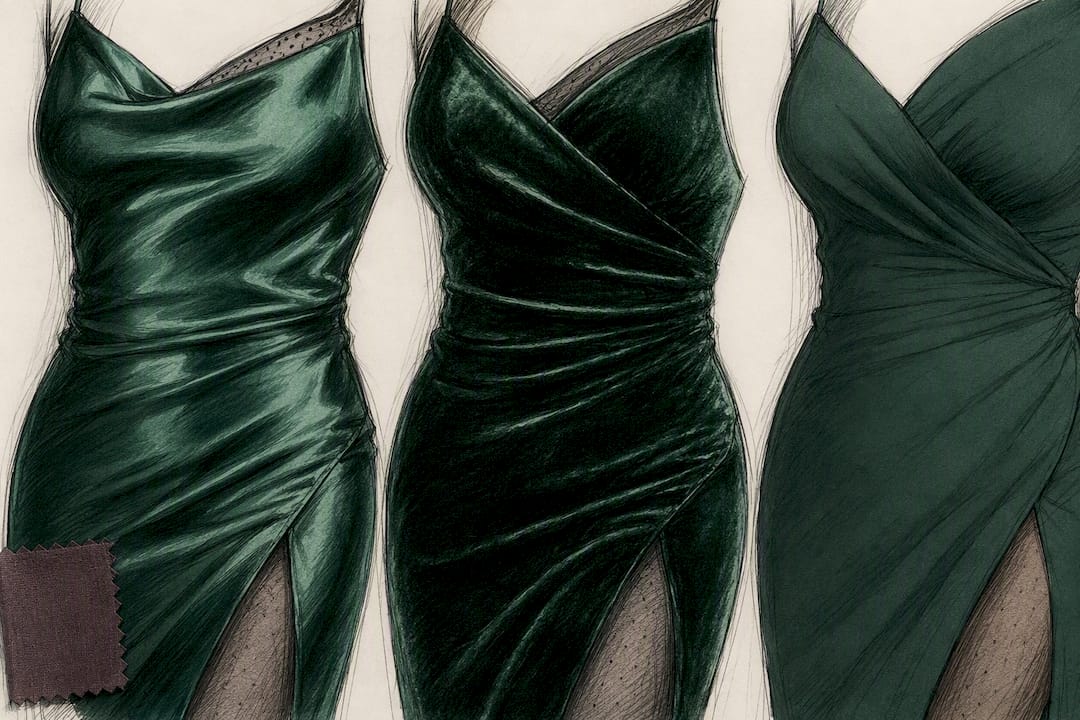
Fabric quality matters as much as finish. Cheap synthetics can throw an unwanted plastic sheen onto deep jewel tones, making rich colors look muddy under certain lights. Natural fibers or a well-made satin hold color the way it’s meant to be seen, especially in saturated shades like sapphire or aubergine.
Pro Tip: If you’re choosing a dress for photos, whether that’s a wedding, a red carpet moment, or a concert with stage lighting, matte and semi-matte finishes tend to photograph more evenly than high-shine satin, which can blow out under flash or spotlights.
How to Test a Dress Color Before You Buy It
Skip the guesswork with a five-minute test you can do at home:
- Stand near a window in natural daylight, not under artificial bulbs.
- Wash off heavy makeup so your bare skin shows through.
- Drape the fabric plainly against your chest and shoulders, no folds or shadows.
- Take a photo on your phone, then compare it against a plain white or cream background.
Look for a few specific signs once you’ve got the photo. Does the color make your skin look brighter, or dull and tired? Do your eyes look sharper against the fabric, or does the color flatten them? Does the shade create shadows under your eyes or along your jaw that weren’t there against a neutral background? Testing in natural light with a plain drape is exactly the method colorists use, and it works just as well with a fabric swatch as it does with an actual dress.
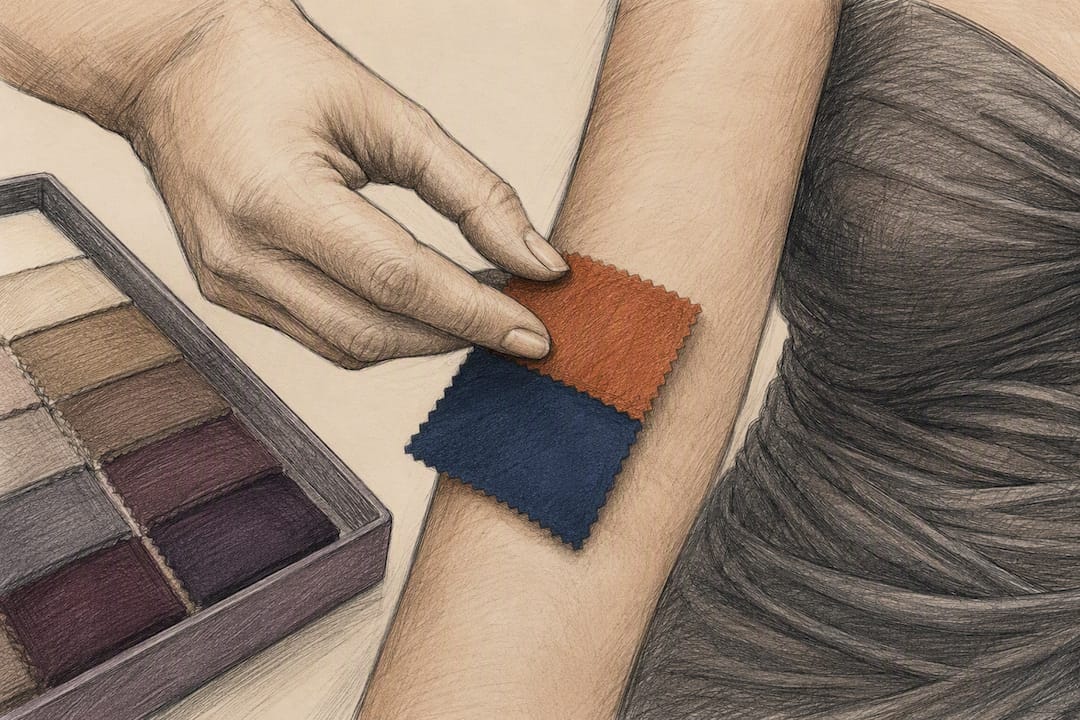
This is where ordering dress color swatches from Prima Dons and Donnas pays off. Test the real fabric against your real skin before committing to a made-to-order piece, and for custom colors outside the standard swatch set, request a specific match when you place your order.
Why Custom Color Matching Beats Guessing From a Screen
Screens lie about color more than any other part of this process. A dress that looks perfectly cool-toned blue on a laptop can arrive with a greenish cast in person, which is exactly why swatch testing matters more than scrolling through product photos. Color decisions can be built into the made-to-order process itself, not bolted on after the fact. A style like the Mirror Skater Dress, available with custom color and mesh fabric options, exists because plus-size and made-to-order shoppers deserve the same color confidence as anyone buying off a rack.
The stylist tests covered here, vein, fabric, jewelry, only work as a starting point. The real test happens when fabric meets your actual skin in actual light, which is the entire reason swatches exist before a full order goes out.
— Latoya
Get Your Exact Color Match: Swatches, Custom Fit, and Ready-to-Ship Options
Primadonsanddonnas is the alternative to buying blind off a product photo. You get to hold the real fabric against your real skin before a single stitch of your dress gets cut, which removes the biggest risk in ordering a special-occasion piece online.

Start by requesting free dress color swatches and testing them in daylight using the checklist above. Once you’ve confirmed your best shade, browse the made-to-order dress collection built in any size, including plus sizes, and available in your matched color. Layering for a wedding or a cooler event? The custom outerwear collection covers coats and jackets in the same custom-color process. For styling ideas once your color is locked in, this guide on dressing for a formal event and this rundown of muted, work-appropriate palettes round out your options. Need it fast? Check the ready-to-ship pieces for concerts, lunch dates, and last-minute party invites.
Sources
- How to Figure Out What Color Looks Best on You With 3 Easy Stylist-Approved Steps — InStyle
- Jergens — Skin undertone guidance
- What Color Dress Looks Best for Your Skin Tone — Lara New York
FAQ
What dress color is best for a normal, average skin tone?
There’s no single “normal” skin tone, since everyone has an undertone, warm, cool, or neutral, that determines the best color family. Identify yours with the vein or white fabric test, then choose from that undertone’s palette rather than a generic “safe” color.
What is the 3-3-3 rule for clothes?
The 3-3-3 rule isn’t a standardized color-matching method, and definitions of it vary across style sources, so it’s best treated as a general capsule-wardrobe concept rather than a rule tied specifically to skin tone and dress color.
What colors are best for my skin tone?
Warm undertones look best in rust, olive, camel, and golden yellow; cool undertones shine in sapphire, plum, and berry red; neutral undertones can wear muted versions of nearly any shade. Across all three groups, true red, navy, and emerald tend to flatter almost everyone.
Which color dress makes skin look lighter or brighter?
Clear, saturated jewel tones like sapphire, emerald, and deep berry tend to brighten skin more than pale pastels, which can wash out fair skin instead of lifting it. Testing the fabric in natural daylight against your face, the same method used with Prima Dons and Donnas swatches, is the most reliable way to confirm the effect before you buy.


Leave a comment